Long-Range View Homes in Big Canoe | Neighborhood Guide #4
Long-Range View Homes in Big Canoe | Neighborhood Guide #4
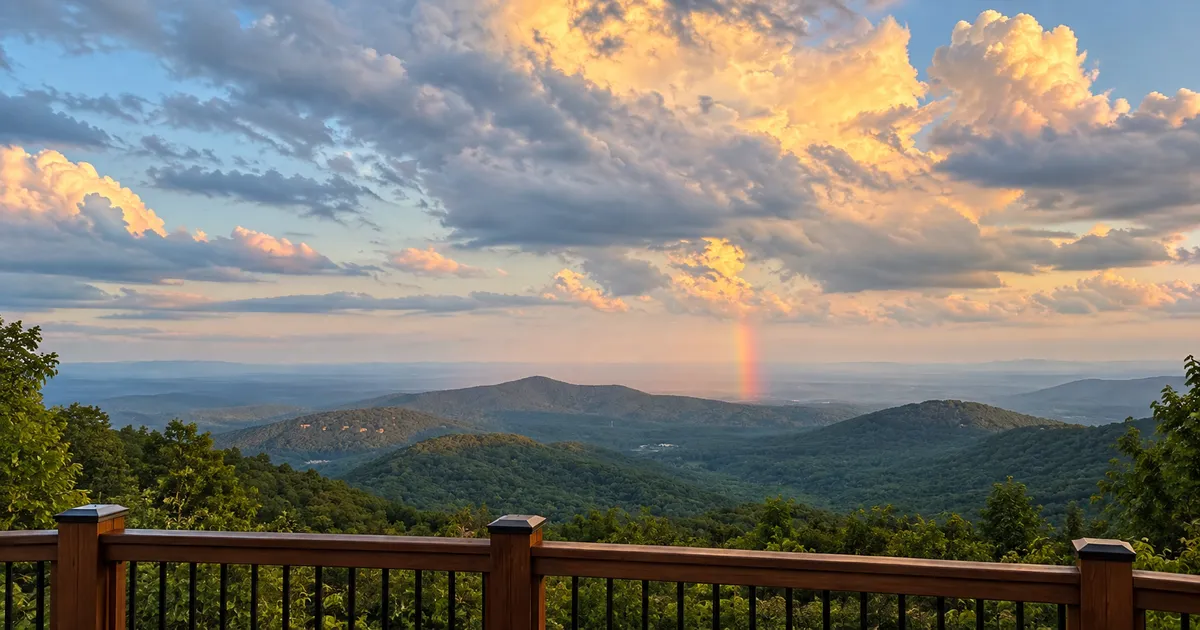
Ask most buyers what they picture when they think of a home in the North Georgia mountains, and the answer is almost always the same: a deck, a cup of coffee, and ridgelines stretching out as far as you can see. Long-range view homes are what many luxury buyers have in mind when they first call me.
They are also the homes where the details matter most. Two listings can both say "mountain views" and be completely different experiences. I live in Big Canoe, so here is how I help buyers sort out what they are really looking at.
What counts as a "real" long-range view?
A true long-range view means you can see well beyond your own lot and your neighbors' roofs. Think layered ridgelines fading into the distance, open sky, and a horizon line. A short-range view, by contrast, is the trees and slope right around the house, which can be lovely but is a different thing.
Between those two sits a view buyers often overlook: the filtered or seasonal view, where you can see the distance through bare branches but the leaves close it off for part of the year. When you tour, ask yourself a simple question: what will this look like in July, and what will it look like in January?
Summer views vs. winter views
This is the single biggest source of surprise for out-of-town buyers. A home that shows beautifully in November can feel like a green wall in June. And the reverse is true too: a home that looks private and wooded in summer may open up to wide views once the leaves drop.
If you can, see a home in more than one season, or ask the seller for photos taken in different months. A few other things to keep in mind:
Trees grow. A view that is clear today may be partly blocked in five or ten years, especially if the trees in front of the home belong to a neighbor or to common property.
Clearing for a view is not automatic. Before you assume you can remove trees to open up a view, confirm what the Big Canoe POA's architectural review process allows.
Ask what is protected. Check whether the lots or common areas between the home and the view are likely to stay as they are, or whether they could be built on.
Ridge lots and steep driveways
In the mountains, the best views usually come with the most dramatic terrain. Homes that sit high on a ridge often have steeper driveways, more steps, retaining walls, and decks that sit well above the ground. None of that is a problem. It is simply part of living on a ridge, and it is worth thinking through before you fall in love with the view.
When I tour view homes with buyers, I like to talk through a few practical questions:
How steep is the driveway, and how does it feel in the rain or on a cold morning?
Is there flat parking near the entrance, and how far is it from the car to the front door?
How many steps are there to reach the main living area, and is there a main-level bedroom?
What is the condition of the decks and the structure that supports them? Elevated decks take weather, and they need upkeep.
These questions matter most for buyers who are planning to stay long term. A home you love at 55 should still work well at 75.
Sunrise, sunset, and which way the home faces
The direction a home faces changes how you will use it. An east-facing deck catches the sunrise and stays cooler in the afternoon. A west-facing deck gets the sunset, and also the late-day sun and heat in summer. Neither is better. It depends on how you live, so I always suggest visiting at the time of day you would most often be on the deck.
How views affect price
Homes with strong long-range views often carry a premium over comparable homes without them, but how much varies a great deal. It depends on how wide and how clear the view is, whether it lasts year-round, the condition and style of the home, and the specific lot. A spectacular view on a house that needs major work does not price the same as one on a move-in-ready home.
The honest answer is that there is no single number. The right way to price a view is to look at recent comparable sales for similar homes, and I am happy to pull those for any property you are considering.
A quick checklist for touring view homes
Picture the view in every season, not just the one you are visiting in.
Walk the driveway and the path to the front door.
Stand on the deck at the time of day you would use it most.
Ask what could change the view: tree growth, nearby lots, or neighboring construction.
Confirm the county for the specific home. Big Canoe spans both Pickens and Dawson Counties, and it can matter for taxes (see Guide #3).
Thinking About a View Home in Big Canoe?
I live here, and I know which homes keep their views in January, which driveways are easy and which ones you will dread, and where the sunsets are worth the climb. If you would like to see what is available, let's talk.
Call or text Wanda Stewart at 706-299-9515, or email [email protected].
More in the Neighborhood Guide Series
Next in the series: #5 Near the Gate vs. Deep Inside Big Canoe
Part of the Big Canoe Neighborhoods guide — all seven mountains, 22 neighborhoods, and the full series.
Wanda Stewart is an Associate Broker with RE/MAX Five Star, focused exclusively on Big Canoe and the North Georgia mountains. This guide is for general information only. Views, tree conditions, and rules can change, so please verify current information with the Big Canoe POA and confirm details for any specific property.


