Creekside & Wooded Homes in Big Canoe | Neighborhood Guide #6
Some people come to Big Canoe to see out. Others come to be tucked in.
This guide is about the second kind — homes set down inside the canopy, and along the water. They are quieter and more private than anything on a ridge, and they ask different things of you in return. Guide #4 covers the view homes; this one is its opposite number.
What "wooded" and "creekside" actually mean here
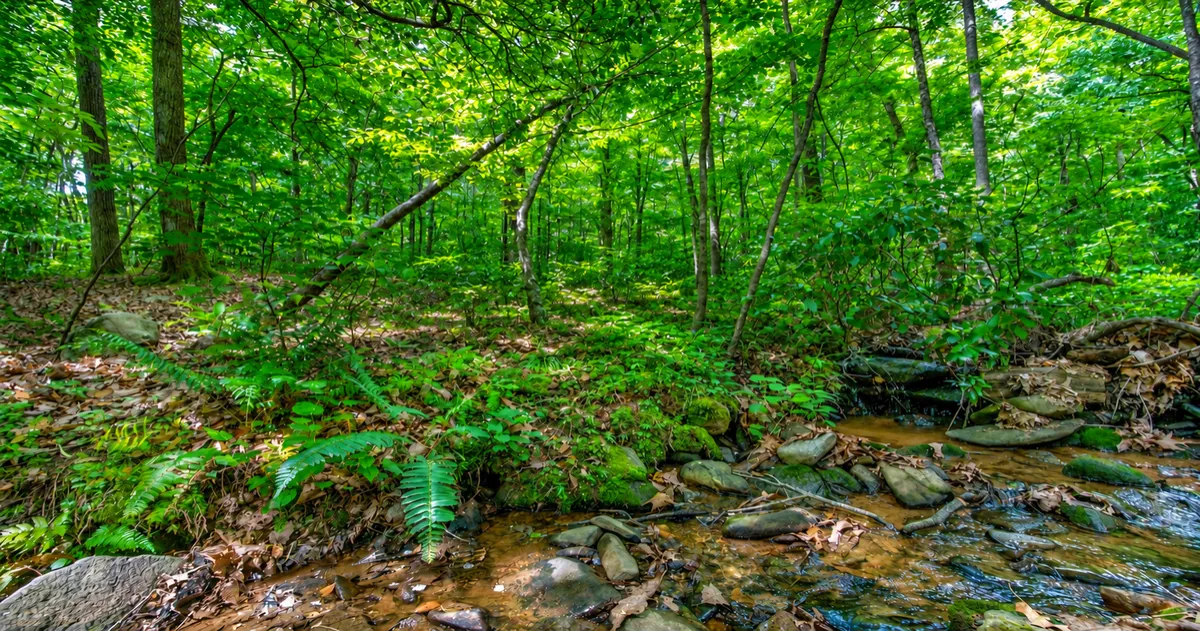
Almost every lot in Big Canoe has trees on it, so "wooded" in a listing does not tell you much on its own. What matters is where the house sits relative to the canopy. On a wooded lot you look into trees rather than over them. The house feels enclosed, the light is green and filtered, and your nearest neighbor may be invisible from the deck even though they are a hundred yards away.
"Creekside" is a narrower claim. It means the lot touches or overlooks moving water. Between the two sits a third category worth naming: homes near a drainage that carries water after rain and goes quiet in a dry August. That is not the same as a year-round creek, and the difference matters if the sound of water is part of why you are buying.
So the first question to ask is simple: does this water run year-round, or only in wet months? Ask the seller, and if you can, walk the lot in late summer when flow is lowest.
Disharoon Creek and the homes along the water
Disharoon Creek is one of the named waterways inside the gate, and homes along a creek corridor behave differently from homes up on a ridge. The air sits cooler and damper down there. Sound carries along the water, which is lovely when it is the creek and less lovely when it is a neighbor's dog. Morning fog settles in the low spots and burns off later than it does higher up.
If you are looking at anything on or near a creek, there are three things to confirm in writing rather than assume:
Flood zone status.Pull the FEMA flood map for the parcel. Being near a creek does not automatically put a home in a flood zone, but you want to know before you talk to an insurer, not after.
Stream buffers.Georgia protects a vegetated buffer along state waters, and Big Canoe has its own architectural review requirements on top of state rules. That affects what you can clear, build, or add near the water — a deck extension, a firepit, a shed. Confirm the buffer that applies to the specific lot before you plan anything.
Where the water goes in a hard rain.North Georgia gets intense downpours. Ask to see the lot, or photos of it, after a heavy storm. A creek that is six feet wide in October tells you nothing about what it does in March.
What privacy in the trees actually buys you
This is the real draw, and it is a genuine one. A well-sited wooded lot gives you a deck where you can have coffee without anyone seeing you, no headlights sweeping your bedroom wall, and wildlife that treats your yard as part of the woods rather than an interruption.
What it does not buy you is silence. Trees soften sound; they do not block it. If a home sits near a main road through the community, a maintenance area, or an amenity, the trees will not solve that. Stand on the deck and just listen for a few minutes — it is the cheapest due diligence there is, and almost nobody does it.
The seasons, in reverse
Guide #4 asked view buyers a question: what will this look like in July, and what will it look like in January? Wooded buyers should ask the same question backwards.
In July a wooded lot is a green room. In January, when the leaves come down, you may discover a neighbor's house, a road, or a rooftop you did not know was there. The privacy you fell in love with in summer is partly seasonal, exactly the way a winter view is partly seasonal.
If you can only see a home once, ask for photos from the opposite season. Any seller who has lived there a year has them on their phone.
Shade and moisture: the part nobody mentions at the showing
Here is the honest trade. Shade and moving water make a home cooler, quieter and more private. They also mean things stay wet longer, and wet things need more attention. None of this should stop you from buying a wooded home — it is simply the maintenance profile that comes with one, and it is better to know it going in.
Roofs hold moss and algae. A roof that gets little direct sun stays damp, and moss holds water against the shingles. Look up at the north-facing roof planes during the showing. Dark streaking and green growth are both common and both treatable, but they shorten a roof's life if ignored.
Decks need sealing more often. A shaded deck can stay slick well into the afternoon. Expect to reseal on a shorter cycle than you would in an open yard, and look closely at the boards nearest the ground and around the posts.
Siding mildews on the shaded sides. Usually a soft-wash cleaning problem rather than a structural one. Check the lower courses and anywhere a shrub is planted tight against the wall.
Gutters carry a heavy leaf load. Under a canopy, fall is a real chore and overflowing gutters are what send water where it should not go. Ask whether the home has gutter guards and when the gutters were last cleaned.
Crawl spaces run humid. Encapsulation and a dedicated dehumidifier are common in North Georgia for good reason. If the home has a crawl space, have it looked at specifically, not just glanced at during the general inspection.
Driveways and walkways get slick. Shade plus slope plus algae is a combination worth noticing in person, especially if anyone in the household is unsteady on their feet or you plan to be here in winter.
Firewood and leaf management become part of the year. Not a defect, just a rhythm. Ask a neighbor what their fall looks like.
One upside that rarely gets credit: a house under canopy takes far less afternoon sun, and summer cooling costs reflect that. If you are comparing a wooded home against an exposed one, ask both sellers for twelve months of power bills. It is one of the few comparisons in real estate that gives you a clean number.
How wooded and creekside lots affect price
A true long-range view carries a measurable premium in Big Canoe. Woods and water generally do not carry the same one, which means a comparable house on a wooded lot often represents more square footage for the money.
What they do have is a narrower, more committed buyer pool. The person who wants quiet and privacy is usually not also shopping ridge lots — they are a different buyer with a different list. That cuts both ways: fewer competing offers when you are buying, and a smaller audience when you eventually sell. Pricing a wooded home against view-home comparables is one of the more common mistakes I see, and it is usually what puts a listing into a long run of price reductions.
A quick checklist for touring wooded and creekside homes
Stand on the deck and listen for a full two minutes.
Look up at the roof planes that get the least sun.
Walk the shaded side of the house and check the siding and the ground beside the foundation.
Open the crawl space, or ask for photos if you cannot.
Ask whether the creek runs year-round.
Pull the FEMA flood map before you make an offer.
Ask what the POA's architectural review allows near the water.
Ask for photos from the opposite season.
Ask for twelve months of utility bills.
Check where water goes in a hard rain, not a light one.
Thinking About a Wooded or Creekside Home in Big Canoe?
I live and work in Big Canoe, and I walk these lots in every season. If you are weighing a wooded home against one with a view, or you want an honest read on what a particular creek lot will ask of you, I am glad to talk it through. No pressure and no obligation.
Call or text me at 706-299-9515.
More in the Neighborhood Guide Series
For current numbers on what is selling and at what price, see the Big Canoe market report, updated each quarter.
Part of the Big Canoe Neighborhoods guide — all seven mountains, 22 neighborhoods, and the full series.


